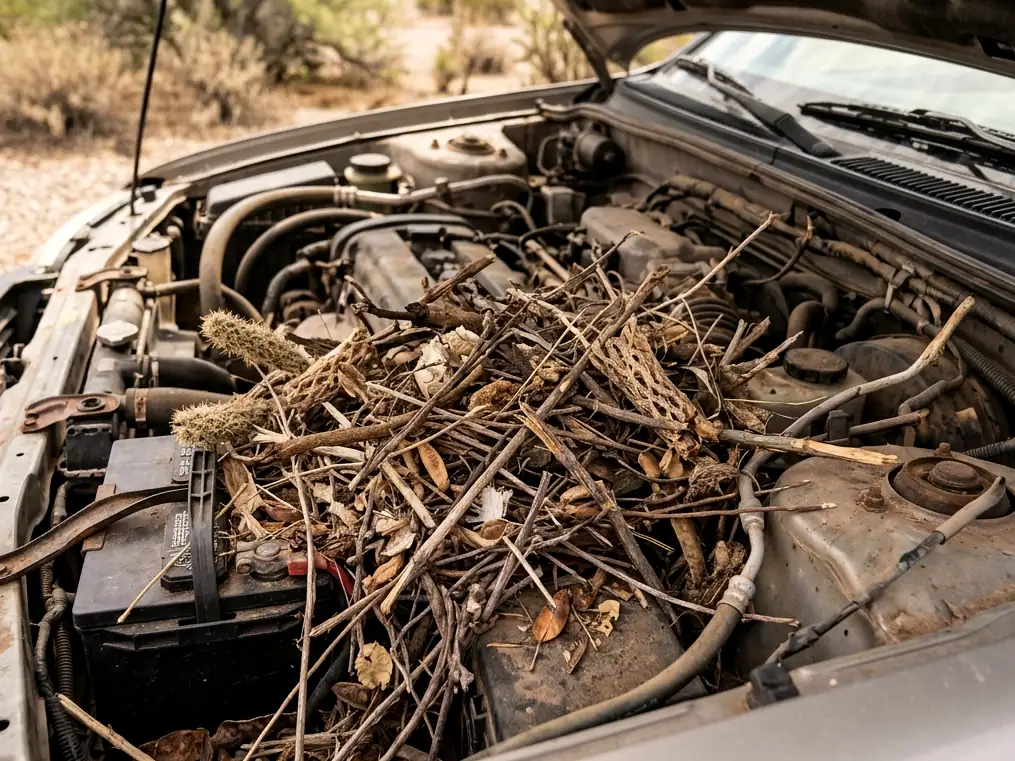
A dashboard warning light and a nest of sticks under the hood: pack rat damage is a common and expensive surprise in desert neighborhoods.
Why cars attract pack rats
The engine bay of a parked car is warm, sheltered and close to the ground, which is exactly what a pack rat looks for in a nest site. Cars that sit for several days, such as a second car, a winter visitor's car or a project vehicle, are the most likely to be used.
Why they chew wiring
Rodents gnaw constantly to keep their front teeth from growing too long. Many modern wire coatings also use soy or other plant based materials that rodents find appealing. The result can be a check engine light, a car that will not start or a repair bill in the thousands.
Signs to watch for
Sticks, cactus pieces, leaves or stuffing under the hood or on the engine cover; droppings on the battery or air box; chewed hoses or insulation; a musty smell when the heater or AC runs; and a dashboard warning light right after the car has been parked for a while.
How to protect your cars
Park inside a closed garage when you can and seal the gaps at the garage door corners. Leave the hood up overnight on cars parked outside, because pack rats prefer dark spaces. Remove cactus piles, brush and woodpiles near the driveway, and do not store pet food or bird seed in the garage.
Getting rid of them
Trapping is the most reliable removal method. Nests near the home should be cleared with gloves and a mask, and the nest site can be treated for kissing bugs and fleas that live in pack rat nests. Sealing the garage and clearing nearby habitat keeps new rats from moving in.
Talk to your insurer
Some comprehensive auto policies cover rodent damage. Photos of the nest and the damage help with a claim.
Related services:
Chester Barnhart, Bug Blog Editor
Chester writes and edits the Bug Blog from the notes our technicians bring back from Mesa homes, so every post reflects what we actually find in East Valley yards.