Mesa has a long citrus history, and roof rats have learned to take advantage of it.
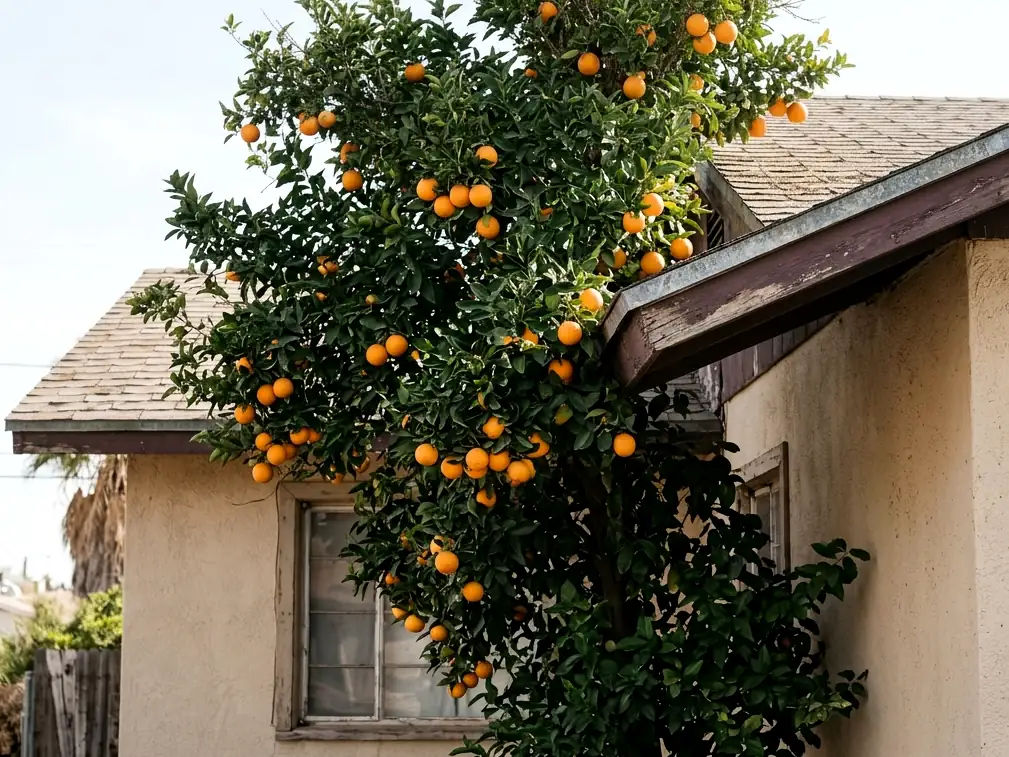
A Mesa citrus story
Mesa grew up with orange groves, and many older neighborhoods still have mature citrus in the back yard. Roof rats, which arrived in the Valley in the early 2000s, have spread through exactly those neighborhoods because citrus gives them food and dense cover all winter.
Signs in your trees
The clearest sign is fruit hollowed out while still hanging on the tree, with only the rind left. You may also see droppings under the tree, gnawed bark and rats running along the top of the block wall or utility lines at dusk.
From tree to attic
Roof rats are excellent climbers. Branches touching the roof, palms next to the eaves and vines on the walls give them a path to roof vents, gaps under tile and pipe chases into the attic. Once inside, they nest in insulation and come and go at night.
Pick up fallen fruit
Fallen fruit feeds rats and keeps them close to the house. Pick it up every few days during the season, and harvest ripe fruit promptly. Store pet food and bird seed in sealed containers.
Trim and seal
Cut branches back at least three to four feet from the roof and remove dense growth along the walls. Seal roof vents with heavy screen, close gaps at the eaves and around pipes, and check garage door corners.
Professional control
Effective roof rat control combines trapping in the attic and along travel routes, locked bait stations outside and exclusion work to close entry points. After the rats are gone, cleaning up droppings and nesting material in the attic is worth doing.
Related services:
Chester Barnhart, Bug Blog Editor
Chester writes and edits the Bug Blog from the notes our technicians bring back from Mesa homes, so every post reflects what we actually find in East Valley yards.