What we see in Mesa homes
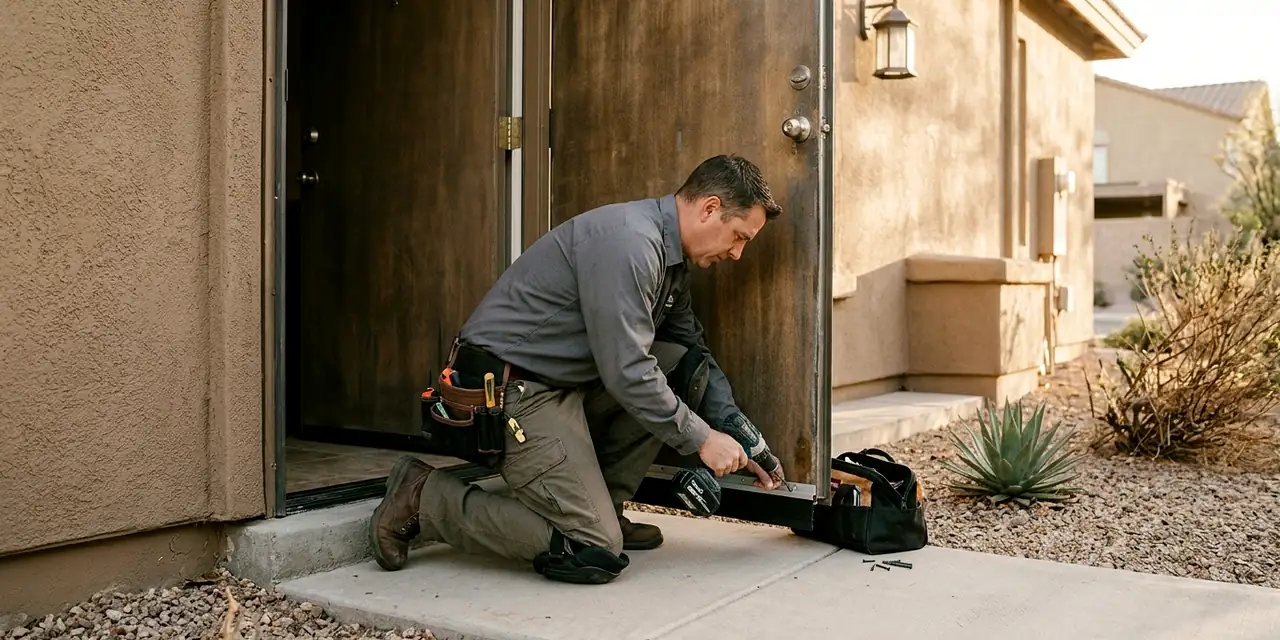
A bark scorpion can flatten itself enough to squeeze through a gap of about one sixteenth of an inch. That means the space under a worn door sweep, the crack where stucco meets the slab, the hole where a hose bib goes through the wall and the open top of a block wall are all doors as far as a scorpion is concerned.
Our sealing visit is a hands-on job. A technician goes around the house with a light and a checklist, then installs door sweeps and thresholds, caulks plumbing and electrical penetrations, screens weep holes and attic vents, and fills gaps along the stucco weep screed. When you pair sealing with regular treatments, indoor sightings usually fall much faster than with spraying alone.
Signs to look for
- Daylight showing under exterior doors or the garage door
- Scorpions found near the same door or window more than once
- Old or missing door sweeps and cracked thresholds
- Open gaps where pipes, cables or the AC line set enter the wall
- Unscreened weep holes or roof vents
How the service works
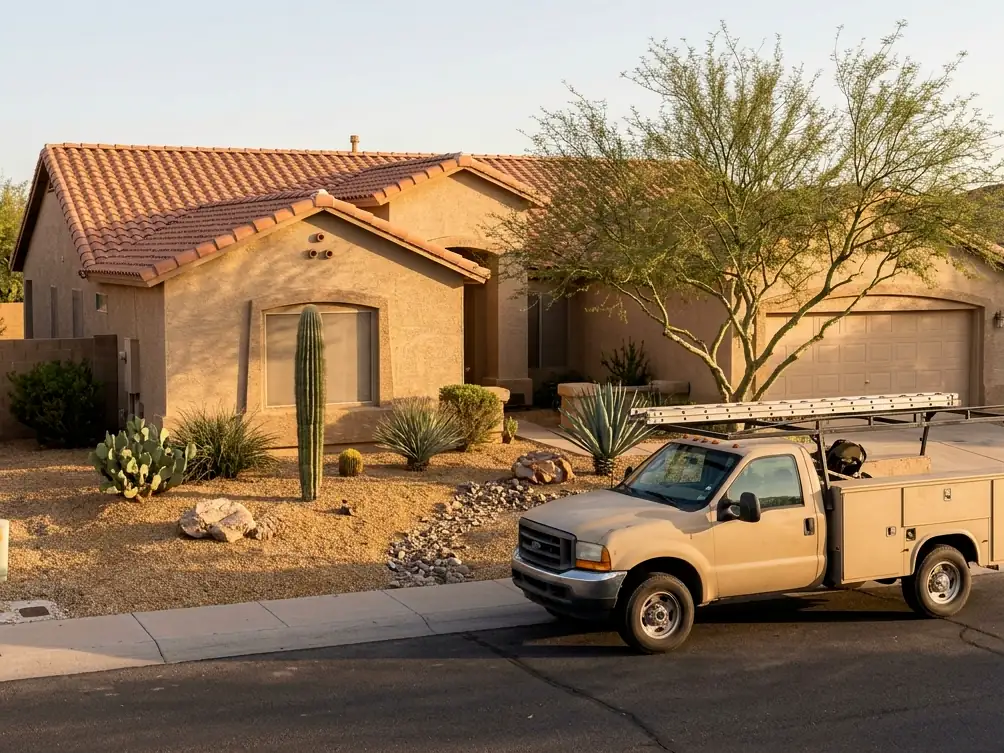
- Inspect every exterior door, window, vent and penetration
- Fit new door sweeps and garage door bottom seals where needed
- Caulk or foam gaps around pipes, cables and the AC line set
- Screen weep holes, roof vents and dryer vents with fine mesh
- Hand you a short report with photos of what we sealed
Cost depends on the number of doors, the garage door width and how many vents need screening. See the Mesa pest control price list for every service.
A Mesa note
Local pattern: Mesa homes from the 1970s and 1980s often have stucco weep screeds that were never sealed and garage door seals that have dried out in the sun. Newer homes in Eastmark and Mountain Bridge usually need less, but even new builds tend to have gaps where the landscaping crew trenched irrigation lines against the slab.