What we see in Mesa homes
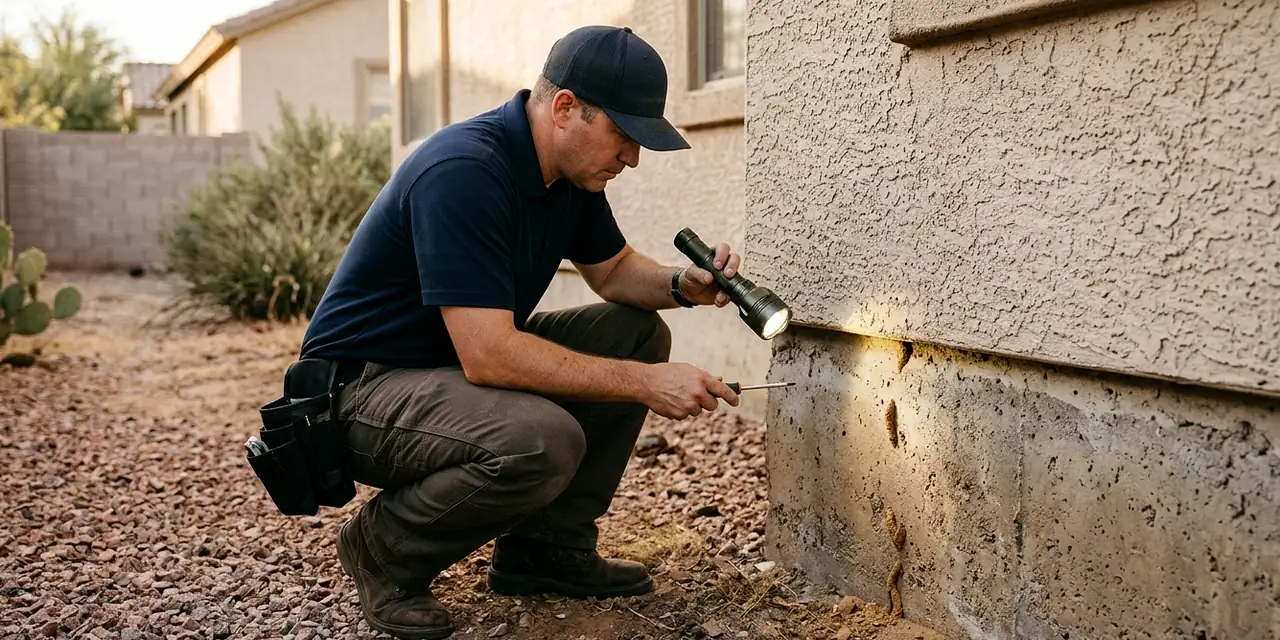
Arizona has several species of subterranean termites, and they do not need wet wood like the termites back east. They build mud tubes up the outside of a stem wall or through a crack in the slab to reach the wood framing. A small tube can be easy to miss, and by the time a homeowner sees damage the colony has often been feeding for a long time.
Our inspector checks the outside foundation, garage, slab cracks, expansion joints, baseboards, door frames, window sills and the attic. You get a clear answer on whether there is activity, old damage or conditions that invite termites, and what we recommend.
Signs to look for
- Pencil-wide mud tubes on stem walls or garage walls
- Swarms of winged termites after the first monsoon rains
- Small piles of discarded wings near windows
- Blistered or hollow sounding baseboards and door frames
- Dirt-filled cracks in the garage slab
How the service works
- Walk the full exterior perimeter and check the stem wall
- Inspect the garage, slab cracks and expansion joints
- Check interior baseboards, door frames and window sills
- Look at the attic and any accessible wood framing
- Explain findings with photos and a clear recommendation
A basic inspection for a home on a plan is free; a standalone inspection has a small fee. See the Mesa pest control price list for every service.
A Mesa note
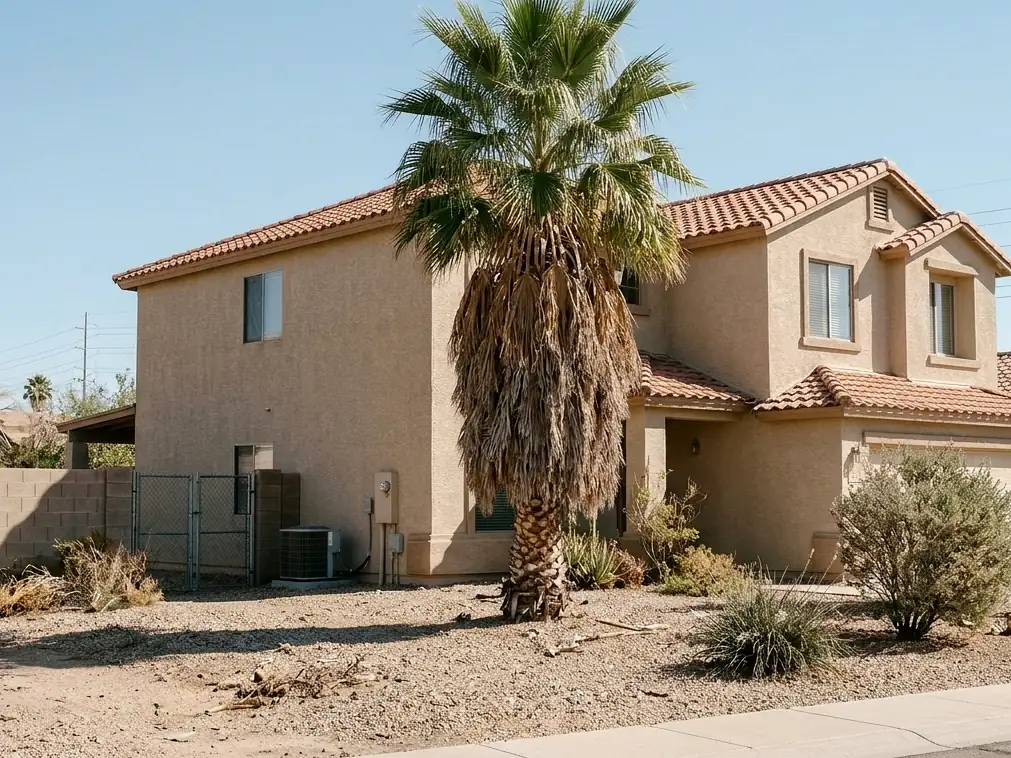
Local pattern: Termite pressure is high across the East Valley, and swarms usually follow the first heavy monsoon storm in July. Homes with wood fences or landscape timbers touching the stucco tend to see activity first.