Kissing bugs are a concern for dogs in the Southwest. Here is what owners should know.
What kissing bugs are
Western conenose bugs, often called kissing bugs, are dark brown to black insects about an inch long, with a narrow cone shaped head and orange or red markings along the edge of the body. They feed on blood at night and spend the day hiding in pack rat nests and other animal dens.
When they show up
In Mesa and the surrounding desert, adults fly in late spring and early summer, from about April through July, and are drawn to porch lights and lit windows. They then crawl inside through gaps under doors and around screens.
Why dogs get bitten
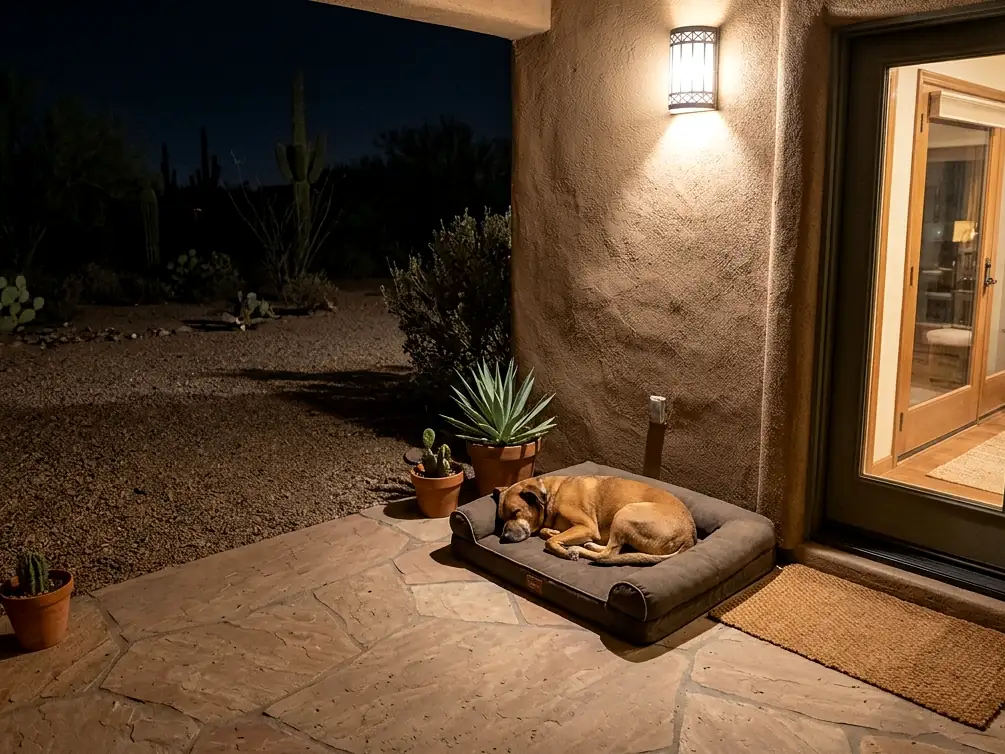
Dogs that sleep outside, in a kennel or on a bed near the back door are easy targets. Bites on dogs often go unnoticed until swelling appears.
Health concerns
Some kissing bugs in Arizona carry Trypanosoma cruzi, the parasite that causes Chagas disease. Transmission happens mainly through the bug's droppings rather than the bite itself, and dogs can also be infected by eating bugs. Chagas in dogs can affect the heart. If your dog has lethargy, fainting or a known exposure, talk to your vet about testing.
Reducing the risk
Bring dogs inside at night during spring and summer. Find and remove pack rat nests near the house, especially under sheds, in prickly pear and in woodpiles. Fit tight door sweeps and repair torn screens. Switch to yellow or motion activated lights near doors.
When to call
If you find kissing bugs inside or see pack rat nests nearby, an inspection can locate the nests and the gaps they use. Treating the nest sites and sealing the house together work far better than treating the bugs alone.
Related services:
Chester Barnhart, Bug Blog Editor
Chester writes and edits the Bug Blog from the notes our technicians bring back from Mesa homes, so every post reflects what we actually find in East Valley yards.