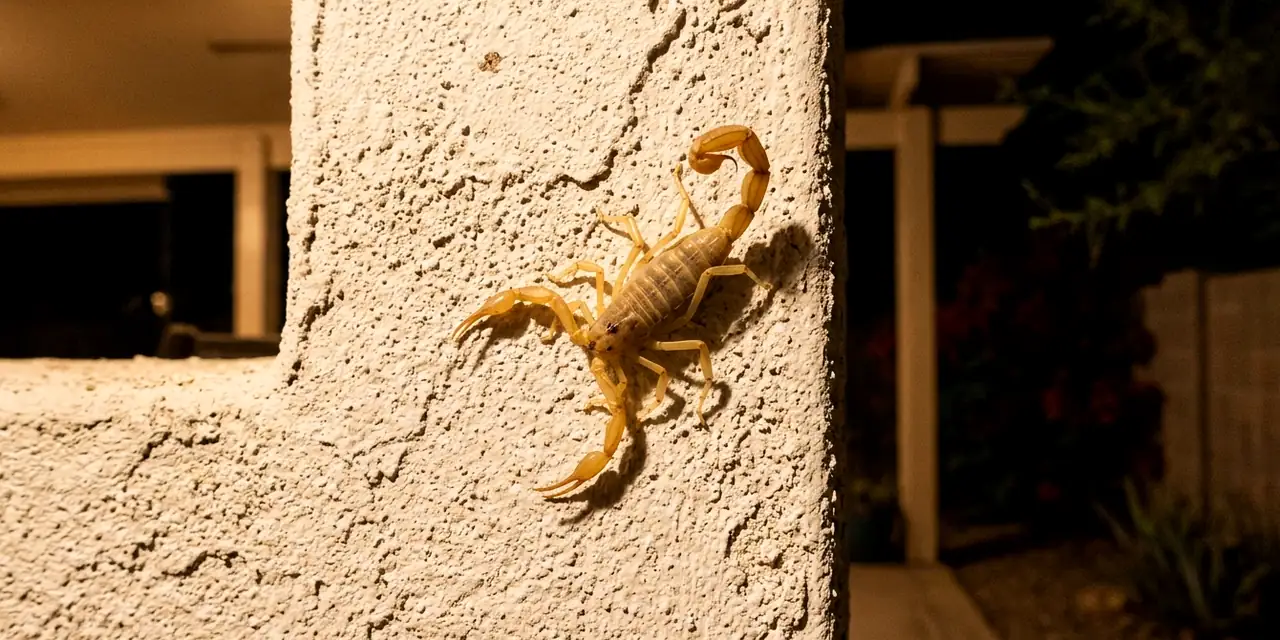
What we see in Mesa homes
The bark scorpion is the only scorpion in the United States with venom strong enough to send a toddler or an older adult to the hospital, and it is the species we find in most Mesa homes. It climbs stucco, block and tree bark, slips through a gap the thickness of a credit card, and it hunts at night, which is why most people meet one in a bathtub, a shoe or a pile of laundry.
Scorpion control works when it goes after the hiding places and the food. Our technicians treat the cracks and voids where scorpions rest during the day, knock down the crickets and roaches they feed on, and point out the entry points that keep letting them in. One spray in the kitchen does not do much; a planned outside-in treatment does.
Signs to look for
- Scorpions in tubs, sinks or showers, especially in the morning
- Sightings along baseboards after dark or in the garage
- Shed skins in closets, behind water heaters or in block wall caps
- A neighbor on the same wash or desert edge reporting stings
- Lots of crickets and roaches, which is what scorpions eat
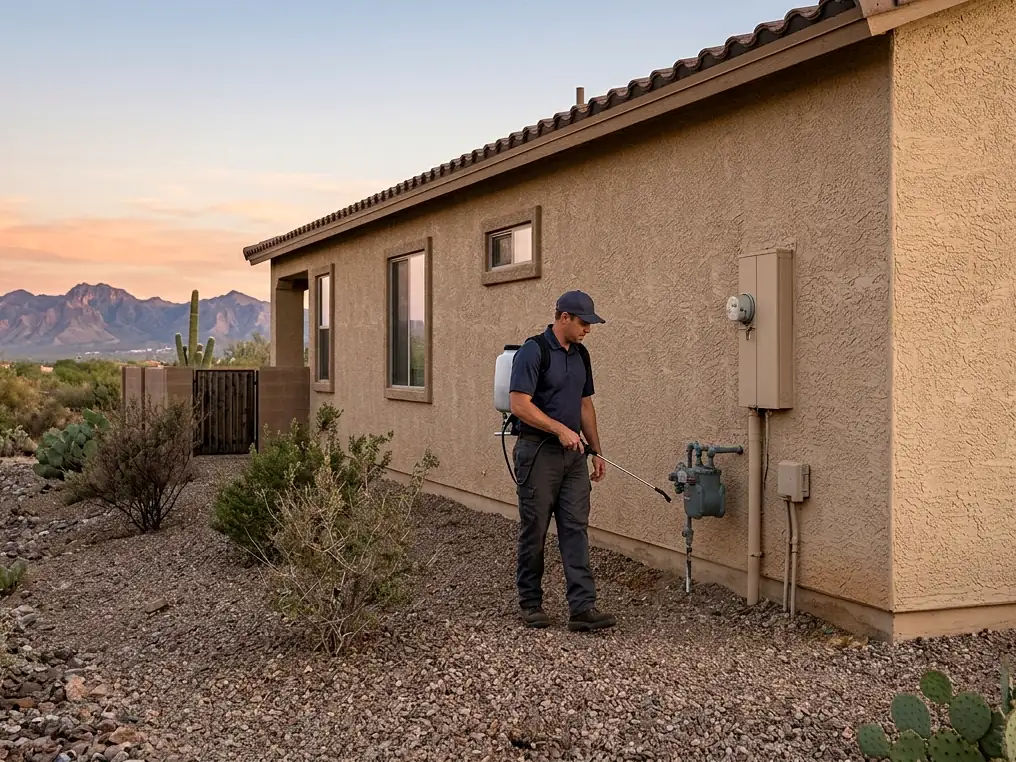
How the service works
- Walk the property at a slow pace: block walls, palm skirts, rock borders, irrigation boxes and the garage door
- Apply a residual treatment to the foundation band, wall caps and harborage spots outside
- Dust wall voids, weep screeds and plumbing penetrations inside where scorpions travel
- Mark the gaps and door sweeps that need sealing and tell you which ones we can close
- Return in 30 days, then move you onto a monthly or quarterly visit depending on pressure
Price depends on the size of the lot, how many block walls you have and whether we dust the attic. See the Mesa pest control price list for every service.
A Mesa note
Local pattern: Homes that back onto the Usery Mountain foothills, the Salt River bottom or any undeveloped desert lot in east Mesa see the most pressure. Older ranch homes near downtown get them too, usually through gaps under doors and around old plumbing lines.