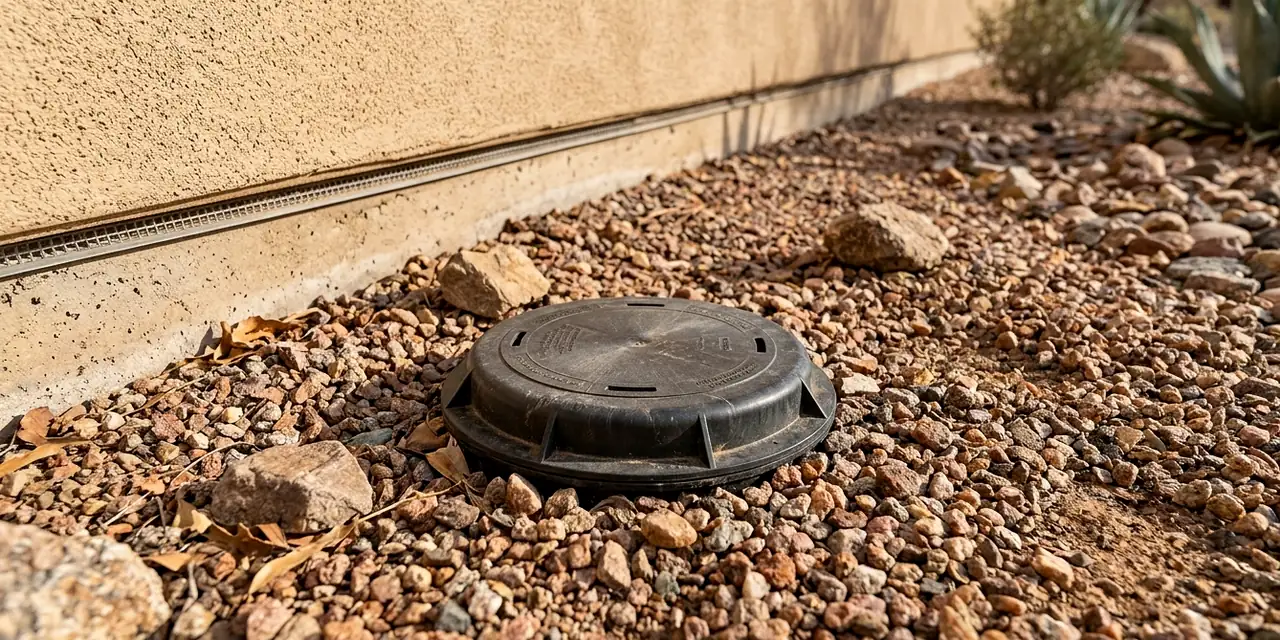
What we see in Mesa homes
A bait system is a ring of in ground stations spaced around the home. Each one holds a cellulose bait that termites prefer over your framing. When workers find a station, they carry the active ingredient back to the colony, where it stops them from molting and the population collapses over several weeks to months.
Baiting suits homes with large paver patios, finished garages or tile floors that make drilling difficult, and owners who like regular monitoring. Our technician checks the stations on a set schedule, replaces bait as needed and records activity at each one.
Signs to look for
- You want termite protection without slab drilling
- Pavers, tile or turf cover most of the soil around the house
- There is a history of termites returning after liquid treatment
- You prefer ongoing monitoring and records
- A neighbor has active termites
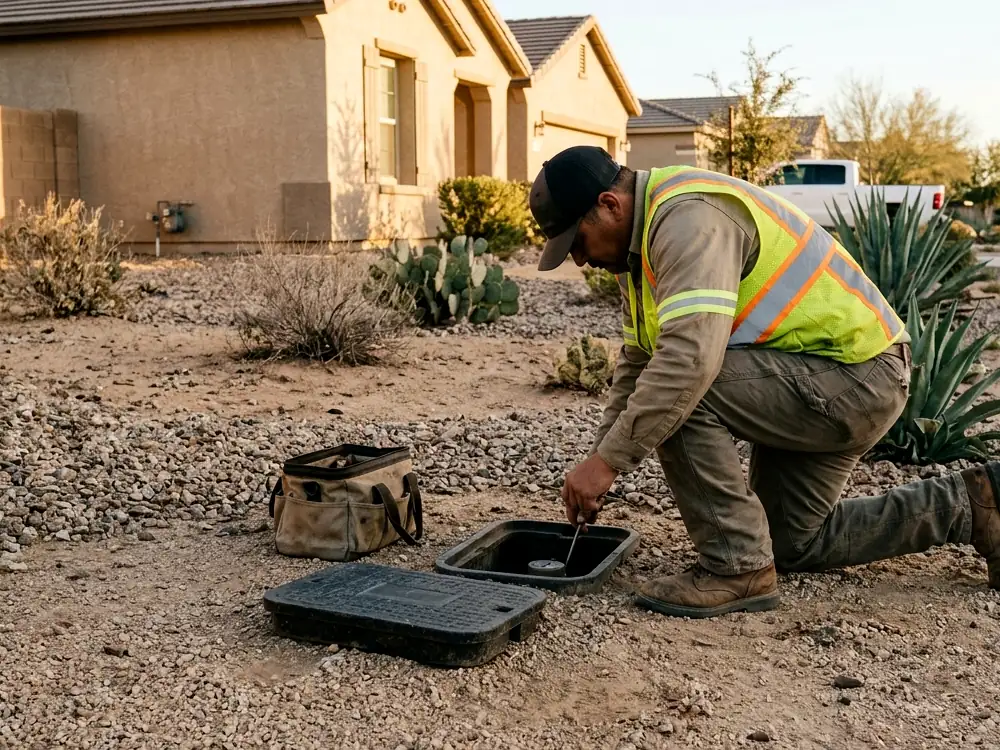
How the service works
- Map the foundation and mark station spots about every 10 to 20 feet
- Install stations flush with the soil or rock
- Load monitoring or active bait
- Inspect stations on the service schedule
- Record activity and replace bait as termites feed
Install cost depends on the number of stations; monitoring is billed per year after the first. See the Mesa pest control price list for every service.
A Mesa note
Local pattern: Desert landscaping with rock and drip irrigation is well suited to bait stations, because stations can sit right in the rock bed. Drip lines near the foundation keep soil moist, which is where termites forage first.