What we see in Mesa homes
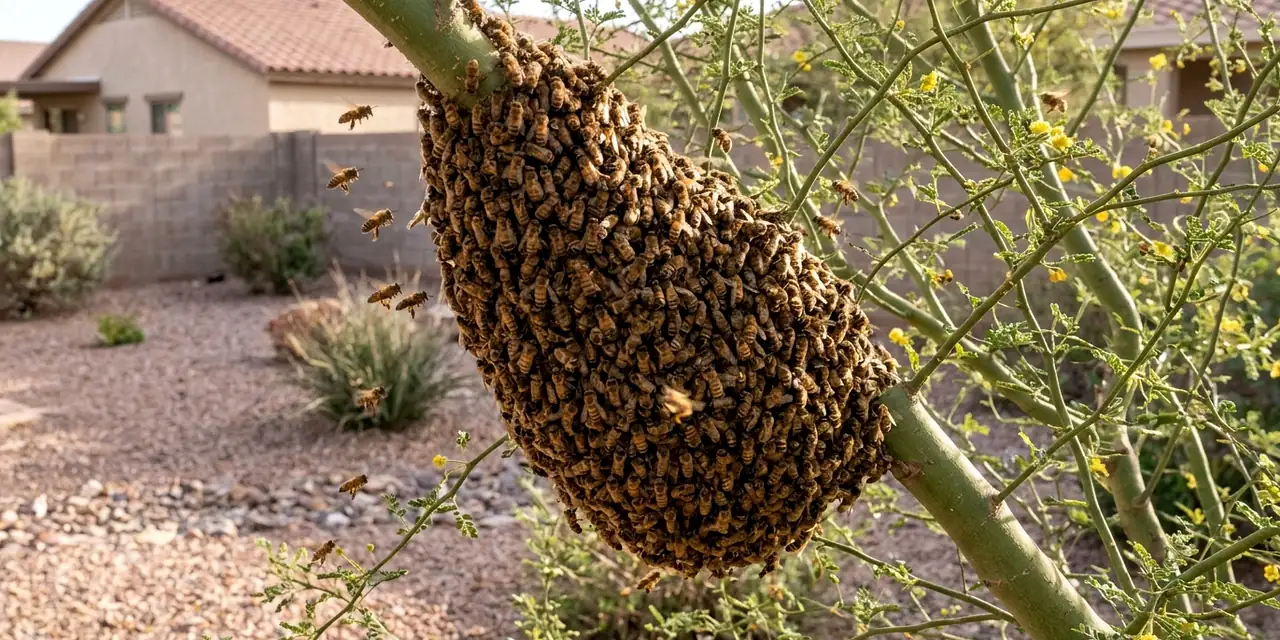
In spring a honey bee colony splits, and half the bees leave with the old queen, landing in a big cluster on a tree branch, eave, fence or BBQ cover while scouts look for a cavity to move into. A hanging swarm is usually calmer than an established hive, but in Arizona nearly all wild colonies carry Africanized genetics and can become aggressive if disturbed.
Our technicians arrive with protective gear, remove the swarm and treat the landing spot to cover the scent that draws more bees. If the bees have already moved into a wall, meter box or roof, that becomes a hive removal.
Signs to look for
- A ball of bees hanging from a branch, eave or fence
- Steady bee traffic in and out of a gap in the house
- Bees gathering around a meter box or irrigation box
- Scout bees checking vents or gaps
- Dead bees piling up near one spot

How the service works
- Keep people and pets away and close windows nearby
- Assess whether it is a swarm or an established colony
- Remove or treat the swarm in protective gear
- Treat the landing spot to remove scent
- Advise on sealing gaps so scouts do not move in
Swarm removal is priced per swarm and goes up for high or hard to reach spots. See the Mesa pest control price list for every service.
A Mesa note
Local pattern: Swarm season peaks from March through May across Mesa and the East Valley, with a second wave in fall. Citrus bloom draws extra bees into older neighborhoods with mature orange trees.