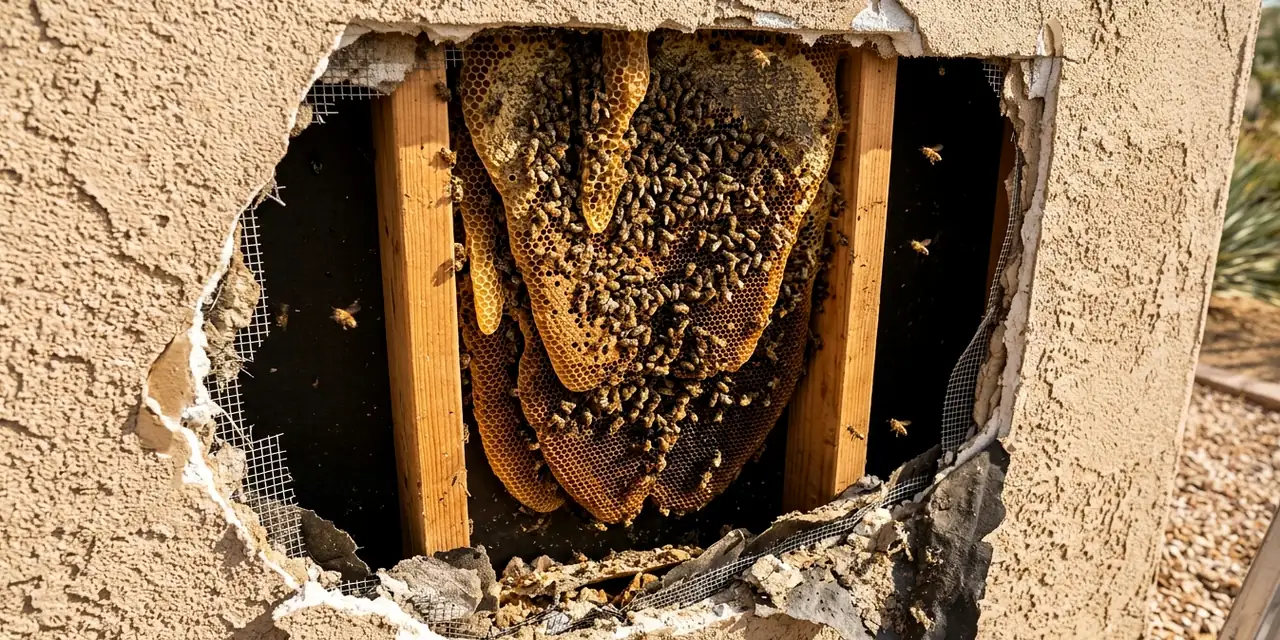
What we see in Mesa homes
Once a colony settles in a cavity, it builds wax comb and stores honey. Killing the bees without removing the comb leaves wax and honey that can melt in the summer heat, stain walls and draw ants, roaches and the next swarm that smells the old hive.
We treat the colony, open the cavity when needed, remove comb and honey, clean the area and seal the entry. Where a repair is needed, we tell you what was opened and what needs patching.
Signs to look for
- Steady bee traffic in and out of one opening
- Buzzing in a wall, ceiling or block wall
- Honey staining on walls or ceilings
- Bees in a water meter or irrigation box
- Wax or dead bees near vents
How the service works
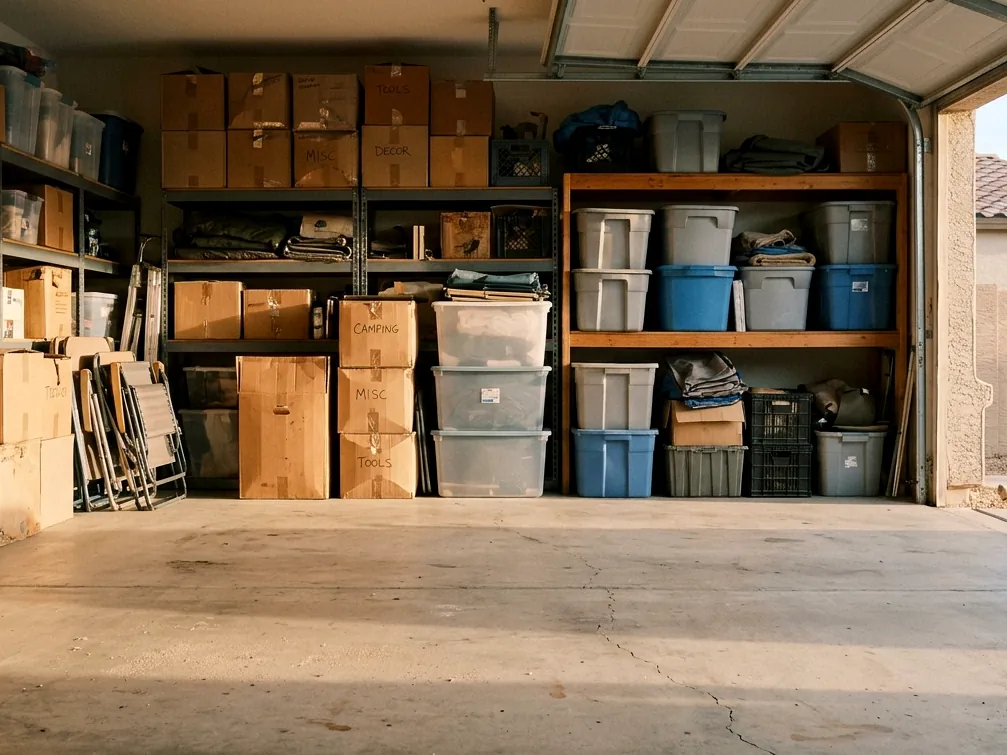
- Locate the colony with a thermal camera or probe
- Treat the bees from a safe position
- Open the cavity and remove comb and honey
- Clean and treat the area to remove scent
- Seal the entry and explain any patch work
Typical cost in Mesa$365 to $1,190 per hive
Price depends on where the hive is, how large it is and how much opening is needed. See the Mesa pest control price list for every service.
A Mesa note
Local pattern: Block wall cavities, water meter boxes and soffits in Mesa homes are the most common places we pull hives from.