Seeing a cluster of bees on a tree or bees flying in and out of a wall can be alarming. A few simple steps keep everyone safe.
Most wild bees here are Africanized
Africanized honey bees reached Arizona in the 1990s, and today most wild honey bee colonies in the Valley carry their genetics. They look the same as other honey bees but defend their colony more quickly, in larger numbers and for a longer distance.
Swarm or hive?
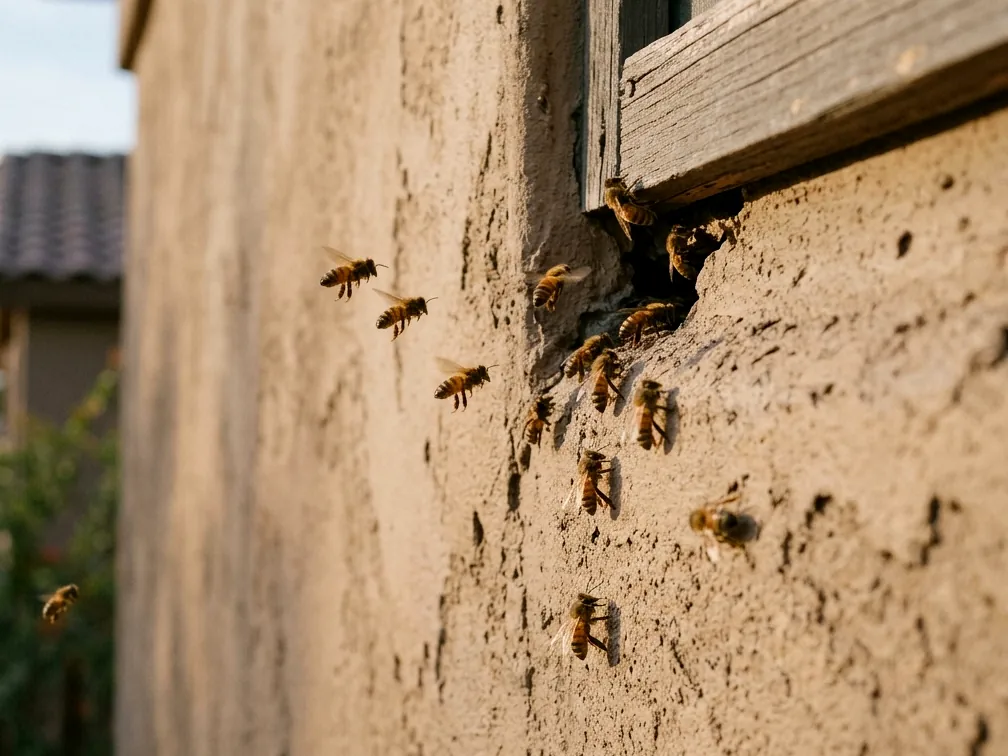
A swarm is a temporary cluster, often hanging like a beard from a branch, eave or fence, while scouts look for a new home. Swarms are usually calmer because they have no comb to protect. A hive is a colony that has moved into a cavity such as a wall, roof, block wall or meter box and started building comb. Steady traffic in and out of one opening means a hive.
Keep your distance
Keep people and pets at least 50 feet away. Avoid running lawn mowers, leaf blowers or trimmers nearby, since vibration and noise can set off a defensive response. Close nearby windows and doors.
Do not spray it yourself
Spraying a swarm or hive with a garden hose or store bought spray is one of the most common ways people get stung many times. It rarely kills the whole colony and often triggers an attack.
If bees attack
Run in a straight line to a car or building and get inside. Cover your face and head with your shirt if you can. Do not jump into a pool; bees wait for you to come up. Once safe, scrape stingers out with a fingernail or card. Call 911 if someone is stung many times, has trouble breathing or is allergic.
Call for removal
Professional removal handles the bees and, for hives, the comb and honey that would otherwise attract new swarms and other pests. Afterward, seal the opening so scouts do not move a new colony into the same space.
Related services:
Chester Barnhart, Bug Blog Editor
Chester writes and edits the Bug Blog from the notes our technicians bring back from Mesa homes, so every post reflects what we actually find in East Valley yards.