Not all roaches are the same, and knowing which one you have changes how you treat it.
American cockroaches
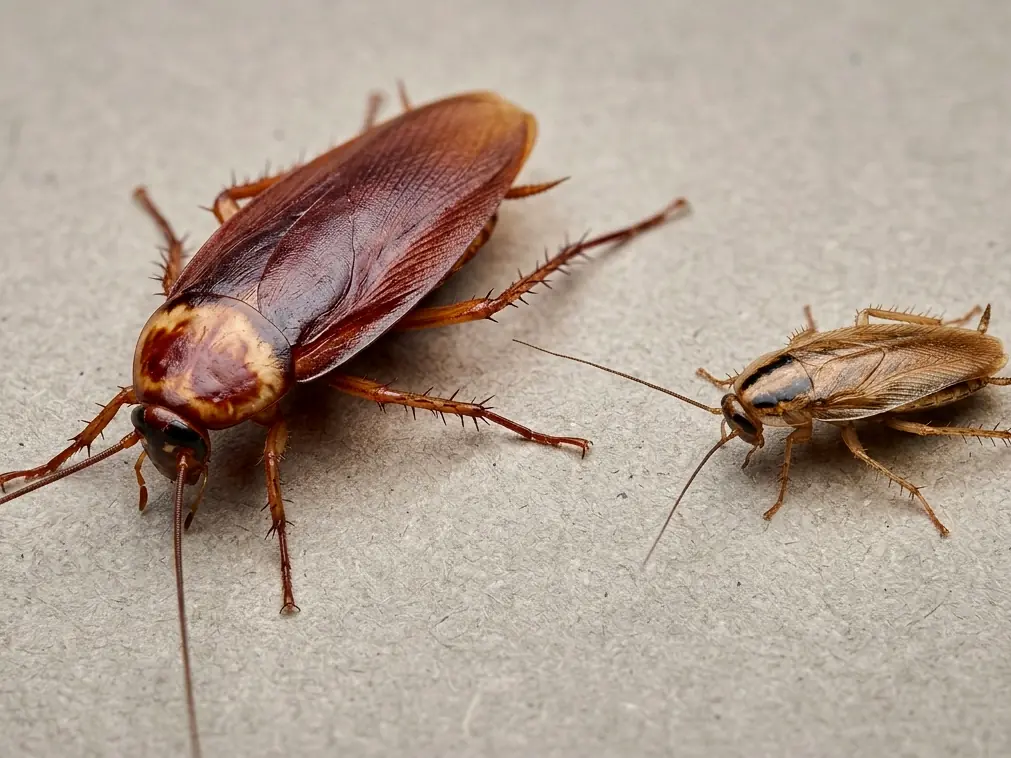
The American cockroach is the big one: reddish brown, often an inch and a half or longer, with a yellowish band behind the head. In the desert they live in sewer lines, storm drains, palm skirts, meter boxes and irrigation valve boxes. They wander inside through floor drains, dry traps in guest bathrooms, gaps under doors and the garage.
Seeing one now and then, especially on a hot night or after a storm, is common in Mesa.
German cockroaches
The German cockroach is small, about half an inch, light tan, with two dark stripes running behind the head. It lives entirely indoors, mostly in kitchens and bathrooms, behind appliances, inside cabinet hinges and under sinks. German roaches come in on grocery boxes, used appliances, furniture and moving boxes, and spread between apartments.
Why the difference matters
American roaches are an outdoor problem that wanders in, so the fix is outside: treating sewer cleanouts, palms and utility boxes, keeping drain traps full and sealing gaps.
German roaches are an indoor breeding problem. Sprays often make them scatter. The fix is gel bait placed exactly where they hide, insect growth regulators to stop the young from maturing, and repeat visits every few weeks.
Daytime sightings tell a story
Roaches hide during the day. Seeing German roaches out in daylight usually means the hiding spots are full and the population is large. One American roach in the garage at night may just be a visitor from the sewer.
Other clues
German roach droppings look like black pepper in cabinet corners and drawers. Egg cases are small, tan and purse shaped. American roach droppings are larger and blunt ended, usually in garages and laundry rooms.
What to do next
Catch one in a jar or take a clear photo and call. Knowing which roach it is decides the whole treatment plan.
Chester Barnhart, Bug Blog Editor
Chester writes and edits the Bug Blog from the notes our technicians bring back from Mesa homes, so every post reflects what we actually find in East Valley yards.