Desert subterranean termites stay out of sight, but they leave a clear clue: thin tubes of mud running up the side of the house.
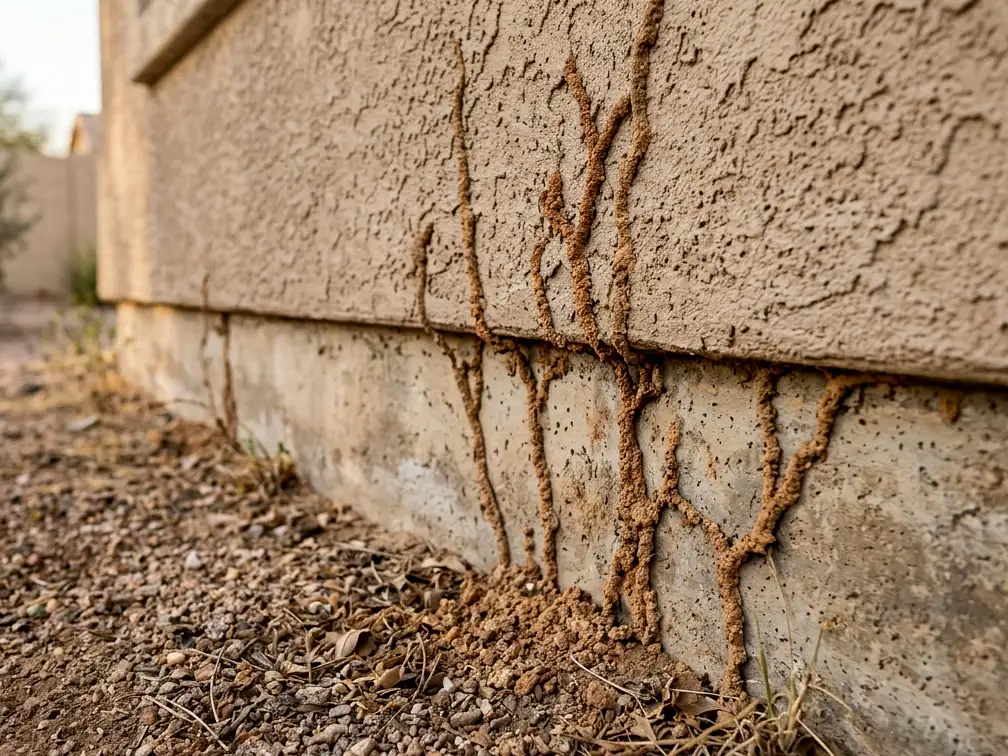
What a mud tube is
Subterranean termites dry out quickly in open air, so they travel inside tubes made of soil, saliva and chewed wood. The tubes protect them as they move from the colony in the soil to the wood framing of the house. A typical working tube is about the width of a pencil, but they can be thinner or form wide, flat sheets.
Where to look on a Mesa home
Walk around the house and look at the stem wall, the narrow band of concrete between the soil and the stucco. Look closely where stucco meets the foundation, behind bushes, under water heater closets and along garage walls.
Inside, check slab cracks and expansion joints in the garage, baseboards and door frames near the floor, and around plumbing penetrations under sinks.
Active or old?
Break a small section of the tube with a screwdriver. If you see small cream colored termites, or if the break is repaired within a few days, the tube is active. Dry, crumbly tubes that stay broken may be old, but they still prove termites reached the structure at some point and that the soil around the home is not protected.
Why scraping them off does not help
The colony lives in the soil, not in the tube. Removing tubes may slow termites for a few days, but they will rebuild or find a hidden path through a slab crack or behind stucco. It also removes the evidence an inspector would use to judge where activity is.
What treatment looks like
The common options are a liquid termiticide applied to the soil around the foundation and through slab cracks, or a ring of bait stations around the home. Liquid treatment works quickly on active infestations. Bait stations work more slowly but suit homes with wide pavers or tile. Many homes use a combination.
After treatment
Keep soil, mulch and wood from piling against the stucco, fix leaks that keep soil wet near the foundation and have the home inspected once a year.
Chester Barnhart, Bug Blog Editor
Chester writes and edits the Bug Blog from the notes our technicians bring back from Mesa homes, so every post reflects what we actually find in East Valley yards.