Monsoon season brings relief from the heat, dramatic storms and a sudden rush of pests. Every year our phones get busy after the first big storm.
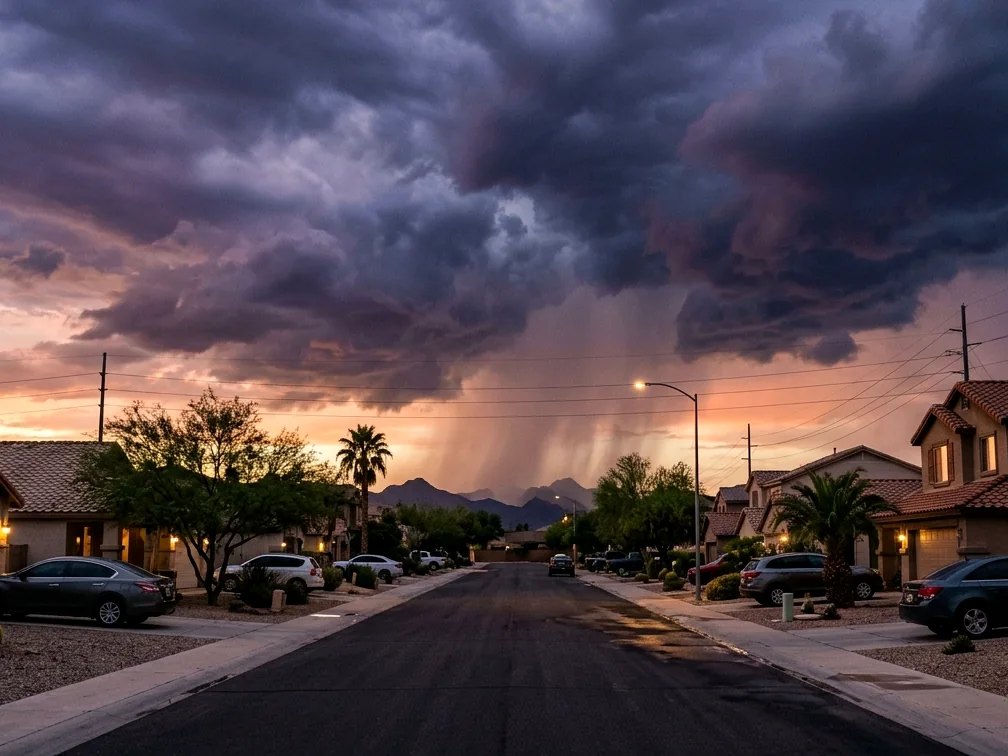
Why storms push pests inside
A monsoon storm can drop an inch of rain in under an hour on ground baked hard all summer. Water runs across the surface instead of soaking in, flooding ant nests, sewer lines, wash bottoms and the cracks where scorpions and roaches hide. Those pests head for dry, higher ground, and a house slab is often the closest option.
Humidity also climbs, which makes it easier for insects to stay active through the night.
Termite swarms after the first big storm
Desert subterranean termites often swarm the evening after the first heavy monsoon rain. Winged termites pour out of the soil, flutter toward lights and then drop their wings. A swarm inside the house, or piles of wings on window sills, means a colony is close by and worth an inspection.
Roaches, crickets and ants
American cockroaches flush out of flooded sewers and storm drains and show up in garages, laundry rooms and bathrooms. Crickets swarm porch lights, and ant colonies relocate indoors, often along baseboards in kitchens and bathrooms.
Scorpions follow the food. A week after the storms start, many Mesa homes see a jump in scorpion sightings as they hunt crickets and roaches near the house.
Mosquitoes
Standing water from storms creates breeding spots within days. Aedes mosquitoes, the small black and white daytime biters, need only a bottle cap of water. Maricopa County tracks West Nile virus in mosquitoes every summer, and positive samples usually show up during monsoon season.
Bees and wasps
Wasps rebuild nests under patio covers, and bees search for water around pools, drip lines and AC condensate drains. A sudden increase in bees at a pool can mean a colony has moved in nearby.
How to get ready
Schedule a perimeter treatment in late June, before the storms start. Check door sweeps and garage seals, clear gutters and roof drains, and run water in unused drains so traps stay full. After each storm, dump standing water and look for new mud tubes along the stem wall.
If you are on a quarterly plan, a visit timed right before monsoon season is the most useful one of the year.
Related services:
Chester Barnhart, Bug Blog Editor
Chester writes and edits the Bug Blog from the notes our technicians bring back from Mesa homes, so every post reflects what we actually find in East Valley yards.