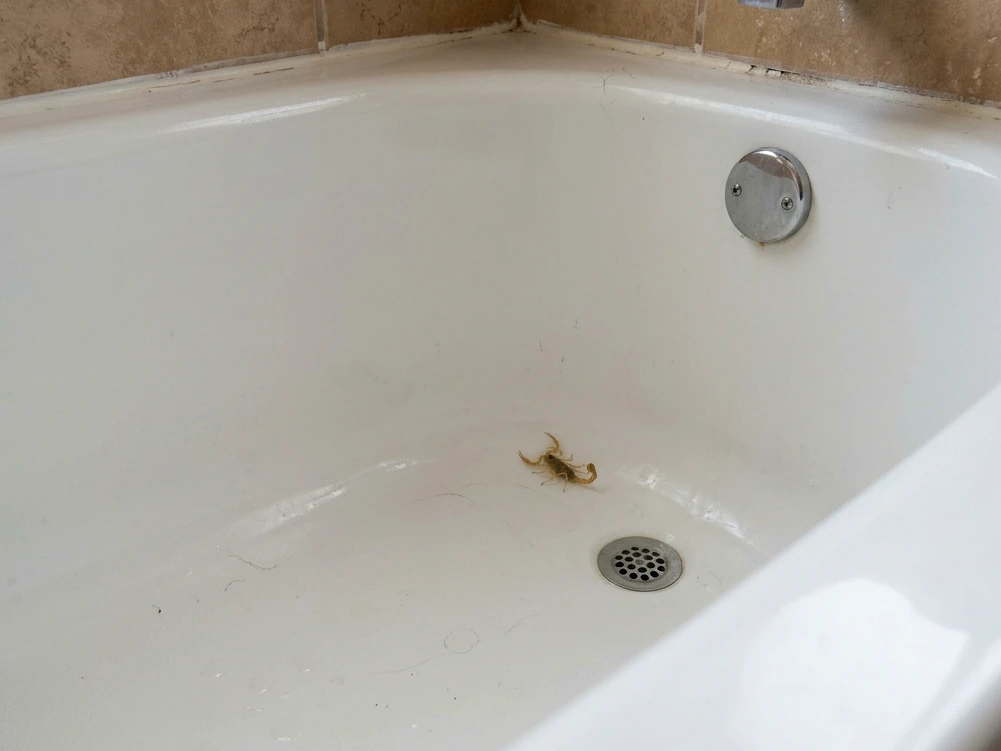
If you live in Mesa long enough, you will meet a bark scorpion. Most people find their first one in the bathtub, and the question that follows is always the same: where did it come from, and are there more?
Mesa is bark scorpion country
The Arizona bark scorpion lives across the Sonoran Desert, and the East Valley sits right in the middle of its range. Neighborhoods on the desert edge, near washes or below the Usery and Superstition foothills see the most, but central Mesa homes get them too.
Bark scorpions are small, light tan and slender, usually two to three inches long. They are the only scorpion in Arizona with venom that can cause serious symptoms, especially in young children and older adults.
Why they end up in the bathtub
Scorpions climb well, but they cannot climb smooth surfaces like porcelain or glass. One that drops in from a ceiling gap or climbs out of a drain area gets stuck in the tub, which is why that is where people find them.
They are also drawn to moisture and cool spots in summer, so bathrooms, laundry rooms and garages are common places to see them.
Where they hide during the day
During the day bark scorpions rest in cracks, under rocks, in block wall caps, in palm skirts and inside wall voids. They come out after dark to hunt crickets, roaches and other insects.
That means a home with lots of insects and lots of hiding spots near the walls will keep seeing scorpions.
What actually helps
Cut down the food supply by treating for crickets and roaches. Remove rock piles, wood stacks and debris near the house. Trim palms and shrubs away from walls. Fit tight door sweeps and seal gaps where pipes enter the house.
A professional treatment plan focuses on the hiding spots and entry points rather than open lawn. In heavy areas, sealing plus monthly service makes the biggest difference.
When to call
If you see more than one or two a month, if someone was stung, or if you have small children or pets, a night inspection and a treatment plan are worth it.
Chester Barnhart, Bug Blog Editor
Chester writes and edits the Bug Blog from the notes our technicians bring back from Mesa homes, so every post reflects what we actually find in East Valley yards.